I’ll call him Maurice. He owned a restaurant in Maine, on the seacoast, and he hadn’t changed his menu for years, despite his shrewdness in business, and despite the fact that calling his combo sandwiches “Buicks,” and “Chevy’s” was no longer new or amusing.
I was a short order cook in Maurice’s place. I had graduated from college the year before and didn’t know what to do with myself. I had come to Maine with a girl after college and then the girl left and I still didn’t know what to do with myself.
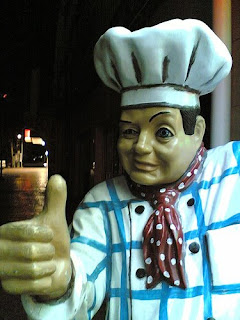 But I learned quite a bit from Maurice.
First, I learned never to trust wholesalers, either in produce or meats. I came upon this information while I was scooping coleslaw out of a gigantic bucket and dumping it into pans near my supply of lettuce and tomatoes. Maurice was in the back of the kitchen, next to the service entrance door. His voice, always loud, began to rise in volume and sharpness of tone.
“Do you think I don’t know what grade of roast beef I’ve ordered?” Maurice was glaring at a youngish looking man going prematurely bald. “Do you think I am so stupid that I don’t know the difference?” I don’t remember how the wholesaler responded—apparently it didn’t soothe Maurice. He shouted, “I love you like a brother but I will not be screwed! Fair is fair, but I WILL NOT BE SCREWED!”
Over the course of several months, I heard Maurice profess his love and outrage to both produce and meat wholesalers. And he made it clear that no relatives, real or metaphorical, would ever screw him.
Once, I remember him giving me a short but instructive formula regarding overhead costs. It was early morning, before the restaurant opened for the day, and Maurice was checking receipts at the bar. I was wiping down the counter when Maurice suddenly glanced up.
“Fifteen percent,” he snapped.
I smiled at him—in an interested, polite way—and continued to wipe down the bar.
“Listen to me,” he commanded, and his forefinger rose to inspire rapt attention. “Fifteen percent,” he repeated ominously. “That is how much your employees will steal from you. No matter what you do, no matter how alert or cautious you are, they will always steal fifteen percent. You must figure that into your overhead.” He went back to checking his receipts.
Sometimes, when Maurice was in an expansive mood, he would walk unannounced into the kitchen and scream, “Hands!” That was the signal for us to line up, put our hands out, and turn them up and down for Maurice’s inspection. Maurice insisted upon absolute cleanliness from his kitchen staff. If he once found your fingernails dirty, you would be subject to one of his roaring tirades. If it happened twice, you were fired….
At nineteen, Maurice had come to this country from Brittany. He found work as a dishwasher in a restaurant in New York. In typical American success story fashion, the owner of the restaurant, who happened to be a mob boss, took a liking to Maurice, saw his potential as a chef, and sent him to culinary school, where Maurice excelled. Eventually, Maurice starred in his own television cooking show that was broadcast all over the Midwest. Soon, Maurice was patenting his own brand of steaks and pastries and selling them to restaurants all across the country. Maurice became very wealthy. He was no more than forty five, but he had already been retired for years. The restaurant he now owned and operated was something of a “hobby” for him.
Like many immigrants to America who had done well, Maurice was rigidly conservative in his politics. He despised “hippies,” or anyone he perceived as not properly reverential towards America. If your hair was long—or you wore a beard—he immediately placed you in the category of “enemy to the state.” His favorite description of such people was “little animals and Indians,” and he viewed them with utter contempt.
I suppose he made exceptions for the odd animal/Indian. He spoke to me, from time to time. My hair was long and I also had a beard.
As the months crept by, I began to wonder why the menu (as I learned from the other employees) hadn’t changed in years. Surely Maurice was clever enough to realize that his restaurant, like all businesses from time to time, needed a certain “freshening” of its product line. I made this observation after suggesting to the manager a new sandwich that I had created. The manager laughed when I offered to glamorize the old sandwich board with a new entry.
“Where do you think you’re working?” he asked me.
I was a college graduate, but I had a degree in liberal arts. “In a restaurant?” I answered.
The manager smiled and shook his head. “You work in a laundry,” he replied softly. He winked at me. Then he told me to put a hamburger on the grille for his lunch.
I was proud, while at the restaurant, to have earned the reputation as the fastest and best short order cook in the restaurant’s history. But it was a Pyrrhic victory, of sorts. I was the fastest short order cook in a restaurant that was never allowed to become too successful—just moderately so, for reasons best known to the IRS and the mob boss who had befriended him when he first came to America.
After a year or so, I left the kitchen, and Maine, behind, and turned to teaching. I still didn’t know what to do with myself, but I knew I didn’t want to do it in a kitchen anymore.
I don’t know what became of Maurice. But I remembered his lessons. Work hard in America, keep your hair trimmed to a proper length, and be grateful when good friends offer you an opportunity to clean their money. And again, watch out for wholesalers.
Donald Gallinger is the author of The Master Planets
View Donald Gallinger's Official Website Blog at: http://www.donaldgallinger.com/dons-blog.html
 But I learned quite a bit from Maurice.

 Posts
Posts